Index
Talent Pools Require Constant Replenishment
10 February 2026
Peter Coffee
This week required my annual filing of interview reports on hopeful college applicants. It’s a time for renewed amazement at the quality of the talent pool, along with a recurring reminder that we need to engage that talent today in solving planet-sized problems tomorrow.
This is a problem for every organization that depends on a combination of technical and scientific knowledge, relevant practical skills, and readiness to go to where the work needs to be done. In the environmental space, some of these organizations are well known—with Greenpeace, The Nature Conservancy, and the World Wildlife Fund being among the names that perhaps come first to mind—but there are many others. The American Society of Mechanical Engineers warned last year, though, that talent shortage is an economy-wide concern, observing:
There are currently more than 920,000 engineering roles open in the U.S., with more than 61,000 alone looking for mechanical engineers. Experts that have examined the data also suggest the data points to a maximum of 15 percent of open roles that could be filled by new talent per year. This, of course, leaves a massive 85 percent (825,000) employee deficit. This figure, specialists point out, despite this substantial number, doesn’t account for people retiring.
That last passing reference (my boldface added) to the loss of talent through retirement deserves special emphasis – because demographics aren’t a matter of “prediction,” but rather a task of simple arithmetic. Given a certain number of engineers aged forty-plus as of Time Zero, the number of prospective engineering retirees during the subsequent two or three decades is not a wild guess.
Nor is this just about engineers, because the supply/demand trends for skilled workers in electrical, plumbing, HVAC and other infrastructure trades are also on predictable pathways to deficit. “A ‘silver tsunami’ of workers has swelled in recent years, causing many infrastructure employers to see 10% (or more) of their workers retire annually – and as more of these workers reach the end of their careers with fewer younger workers to pick up the baton, vast amounts of institutional knowledge and skills may be lost forever,” warned The Brookings Institution in 2023.
That warning remains relevant now: the Financial Times recently headlined the problem of “How economies forget,” pointing out that
Knowledge loss is counterintuitive because we live in a world overflowing with learning. That pushes us to think of knowledge as infrastructure: a building that, once erected, will stand for ages. But knowledge is both alive and fragile. It is embodied in people, and the teams and communities they form, and is transmitted through repeated, almost ritualistic practices. Imagine trying to train a new generation of surgeons in a world where no surgeons remain.
This is not hypothetical. The same Financial Times essay observed that when the U.S. space shuttle program ended in 2011, the knowledge of how to build reusable spacecraft did not go into some kind of dormant state for revival when needed – rather,
Retiring the shuttle was not just grounding a spacecraft. It meant disbanding the team required to sustain a complex capability. Manuals and blueprints are poor substitutes for hands-on experience. To restore human launch capability, the US had to invest billions in contracts with SpaceX and Boeing in an effort to rebuild that capacity and those teams. An effort that, according to a 2019 NASA audit, was running roughly two years behind.
With the future of the talent pool being a multi-decade trajectory, it seems clear that addressing that challenge requires a multi-decade runway – as in, a combination of initiatives and resources that engage and support teenage (and even pre-teenage) populations. One example is NASA’s TechRise Student Challenge, which last year lofted middle-school students’ experimental payloads on a high-altitude balloon – and this year, will fly them on a suborbital spacecraft that will give them three minutes of microgravity. I had the opportunity to watch one of last year’s groups doing its final debugging and integration before shipping off their payload for its balloon flight: seeing middle-schoolers soldering and coding and testing in a garage was an opportunity for hope.
Likewise, my interview-season conversations this year have included time with a high-school senior with his own nonprofit corporation addressing challenges of rural literacy, another who has taken a robot to a village overseas to support her tutoring of students there, and a graduate student working with marginalized (mostly agricultural) workers to acquaint them with their opportunities to get testing and remediation of water contamination issues.
There are two final quotations that come to mind: one from a movie, one from real life. In the movie Margin Call, an MIT Ph.D. rocket scientist played by Zachary Quinto explains how he wound up on Wall Street: “It’s all just numbers really, just changing what you are adding up – and to speak freely, the money here is considerably more attractive.” That’s a problem: as noted in the journal Research Policy,
The US financial sector has become a magnet for the brightest graduates in the science, technology, engineering and mathematical fields (STEM) [with] reallocation towards finance…more pronounced among experienced workers peaking at prime age… [T]he reallocation of STEM is associated with large wage premia in finance, which are heterogeneous across occupations, age groups, degrees and along the wage distribution. Returns to STEMs are higher than returns to other degrees in finance and become very high in finance and managerial occupations at the top of the distribution, especially for postgraduates.
The loss of “experienced workers peaking at prime age” requires particular attention in view of findings like this month's note from the Stanford Center on Longevity, reporting that
Although processing speed declines after early adulthood, other dimensions improve, and overall cognition peaks near retirement age. Studies from the past 15 years show that some qualities like vigilance may worsen with age alongside processing speed, but others improve, including the ability to avoid distractions and accumulated knowledge.
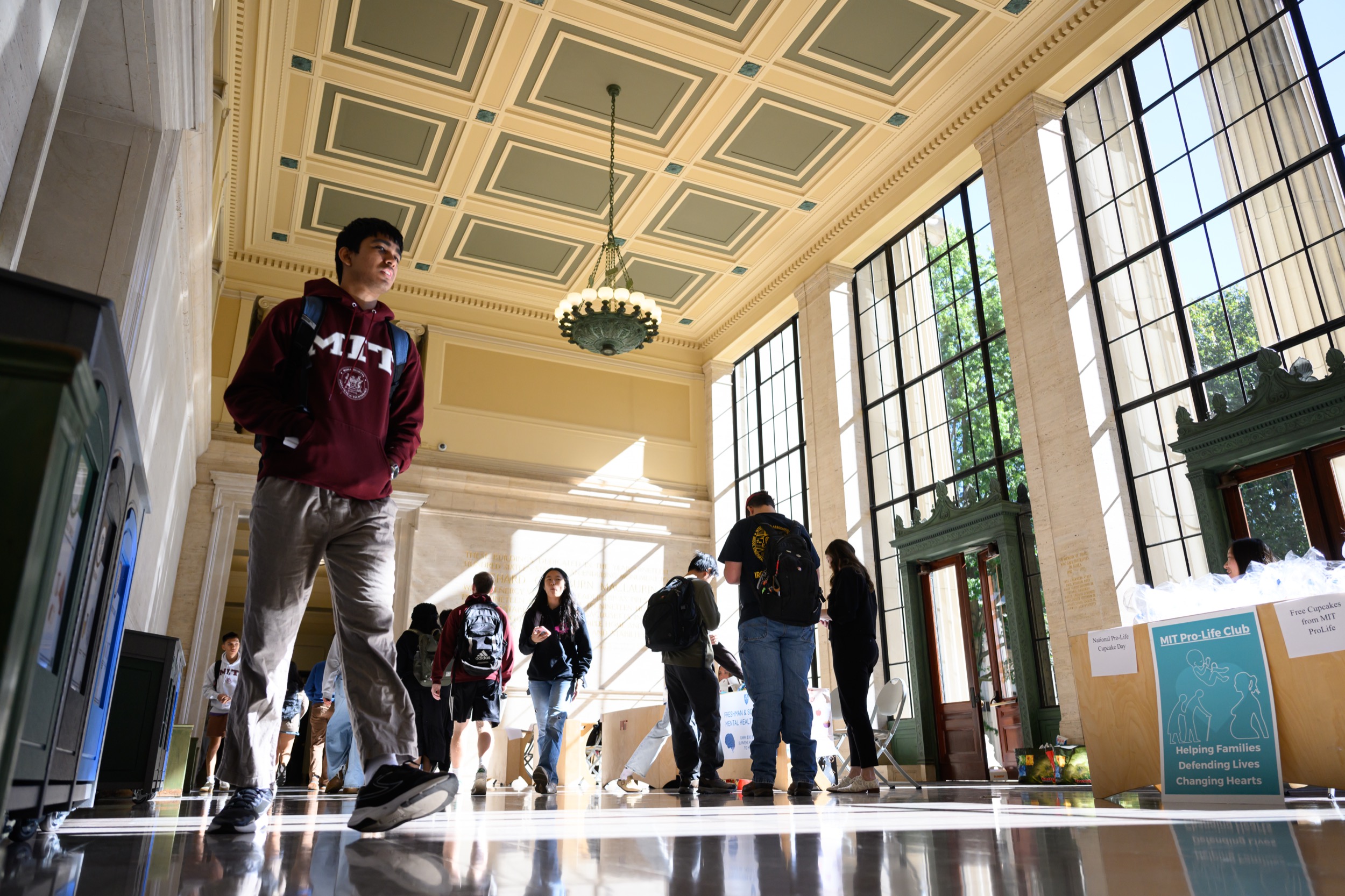
On a wall of the central lobby at MIT, though, there’s inscribed an optimistic sentiment that I often cite from one of its early presidents (who referred to the Institute, as once was common, simply as “Technology”):
I see proceeding from our Technology of the future a vast and vigorous army, sound of body, strong of mind, able to play their part effectively anywhere in the world. As in the past, they will have been inured to hard work; in the future as in the past, they will have had the best professional training that could be given to them. They will, however, have many advantages that were denied to their predecessors. The consequence of that will be, that there will go forth a larger number who are broad enough and effective enough to take a leading part in shaping the destinies of the world.
With a New York Times “Climate Forward” newsletter in my inbox, just this morning, that spotlights “the swift and meticulous dismantling of climate rules we are now seeing,” it seems clear that building that army is as important to “the destinies of the world” as anything else that is being done—or that can be done—today.